Productivity
PostPlus.io
A platform that helps content creators quickly craft breakout-ready images and video assets.
Partially open source•Web / CLI / Skill
Founder · Building AI-Native Organization
I work on agentic systems, context engineering, large-scale distributed systems, and building AI-native organizations.
How I use AI
AI is powerful, but how well it works depends on the rules you give it.
AI makes you faster and messier at the same time. Anyone who uses it well is constantly thinking about how to keep that mess under control.
# Work discipline

## Engineering philosophy

- Update documentation as if it were greenfield: keep historical information to a minimum, so any first-time reader grasps the current state as fast as possible instead of having to wade through the whole useless history of how it evolved, unless the doc is explicitly a running log or a progress record.
- Fail fast wherever we can, rather than letting all sorts of fallbacks paper over the real failure. In other words, avoid degradation handling, fallback, hacks, heuristics, local stabilizations, or post-processing bandages that are not faithful general algorithms.
- No faking and no double-writing to pretend the program runs. Your top priority is to surface errors as early as possible.
- For any rework, prefer deleting code and reusing code over adding new code.
- Aim for a single source of truth.
- Follow the principle of name matching reality: if the semantics change, the symbol's name changes too.Naming a good thinking framework or principle explicitly helps the model actually reach for it. But naming it matters even more for you than for the model: it keeps you leading the work instead of being pulled along by AI.
# Thinking frameworks and working principles

Before you start any specific task, consider whether one of the thinking frameworks below can help you analyze and understand the problem systematically:

[Thinking frameworks]
MECE, Pyramid Principle, First Principles, Issue Tree, People-Goods-Field, Purchase Funnel, Lean MVP, Combinatorial Matrix & Whitespace Search, 7 Powers, Cialdini's Six Principles of Influence

[Working principles]
Fail Fast, Single Source of Truth (SSOT), Name Matches Reality, Brooks's Law, No Silver Bullet (separate essential from accidental complexity), Conway's Law, Technical-Debt Awareness

[Meta-work practices]
Find a benchmark and search the methodology first; run a retro when done and harden reusable steps into a checklistFeatured
A mix of live products, betas, and experiments.
A platform that helps content creators quickly craft breakout-ready images and video assets.
An open-source tool for development teams that catches AI edits accidentally breaking how a page looks, before they ship.
An open-source poker game engine for developers building card-game products; Texas Hold'em is supported today.
An emotional companion AI that chats, empathizes, and listens, helping users find virtual friendship and love.
A general-purpose AI assistant for university students.
Featured
A starting list of essays and notes.
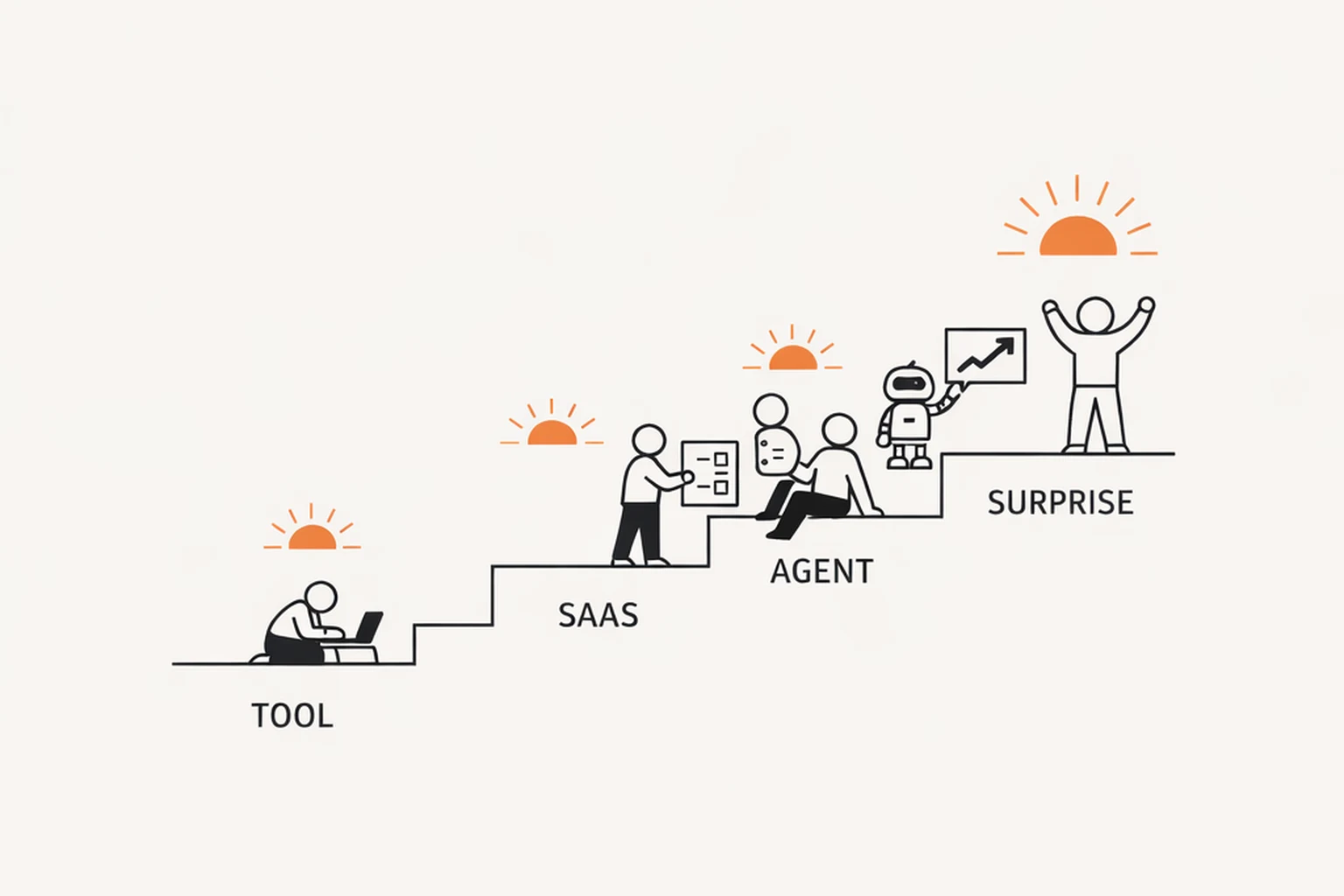
AI-native is not a scale of how much of the old org you have automated — it is a redesign of how people, agents, information, and decisions relate. From four mornings to why a digital employee can charge $20K–200K a year.
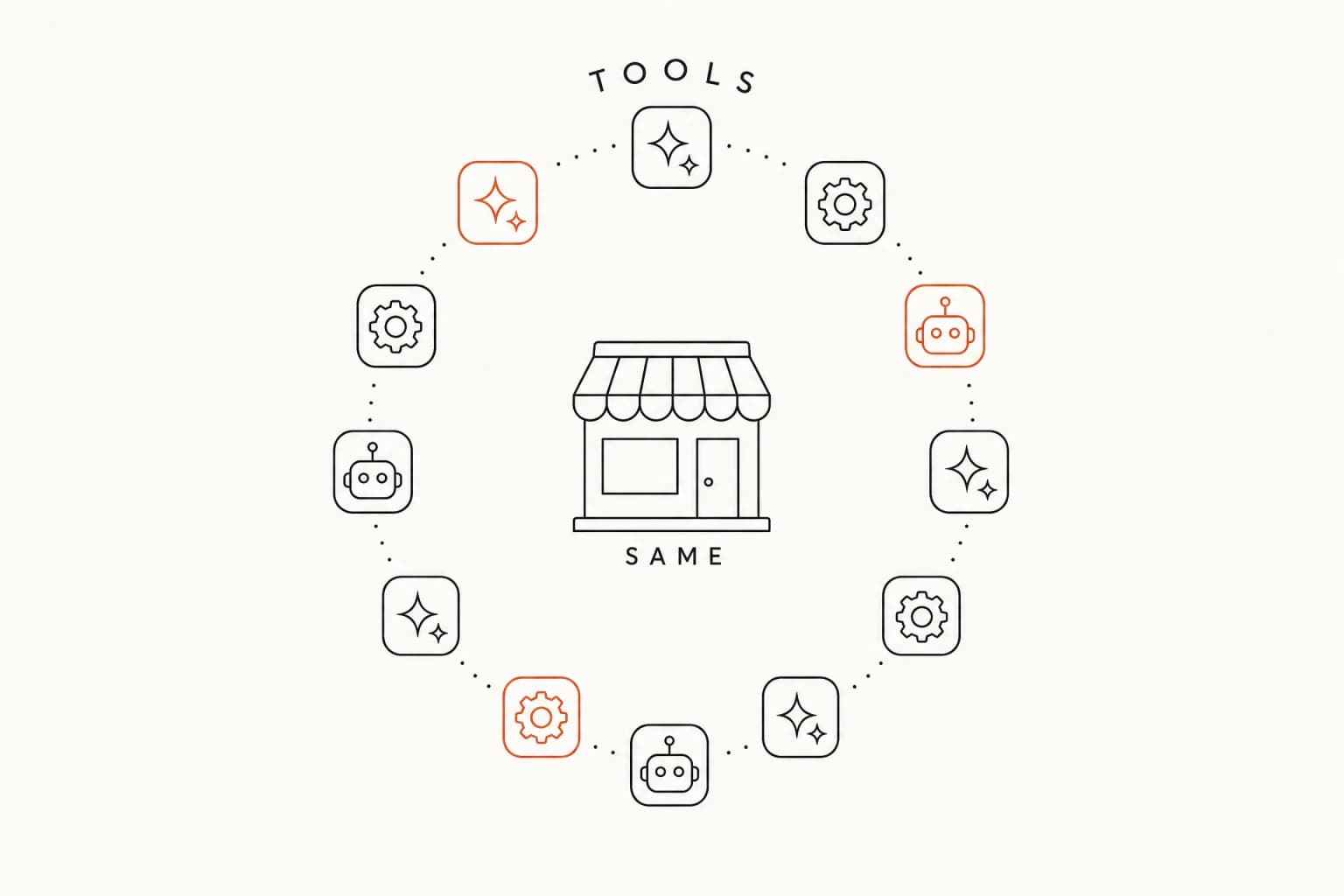
Everyone already knows you just need to supervise AI instead of executing everything yourself; but here's what you don't know: you haven't hired anyone, yet you're already running a company. The AI-Native Organization, Part 1: The individual and the small team.

A department is a context-bounded token partition, a company is a federation of amoebas, and every rule is inherited from software engineering.
The AI-Native Organization, Part 2: Organizations and scale.
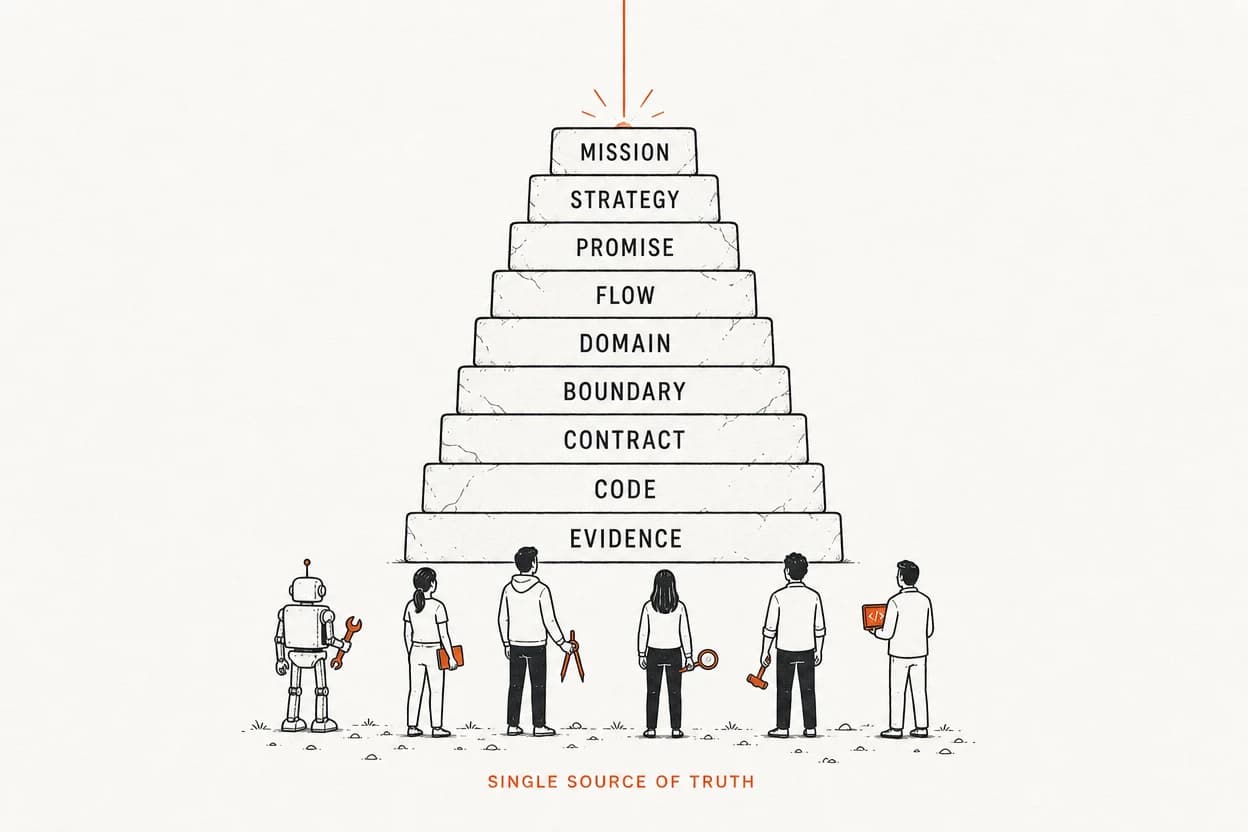
Complex products, AI-native output, and fast iteration naturally split team truth. The SSOT Nine-Layer Pyramid lets AI agents, product, operations, sales, support, and engineering share one current decision snapshot.

A reusable method for constructing a team SSOT that aligns AI agents, product, operations, sales, support, and engineering across mission, strategy, promise, Flow, contract, implementation, and evidence.

A founder note on building AI-native organizations and systems.
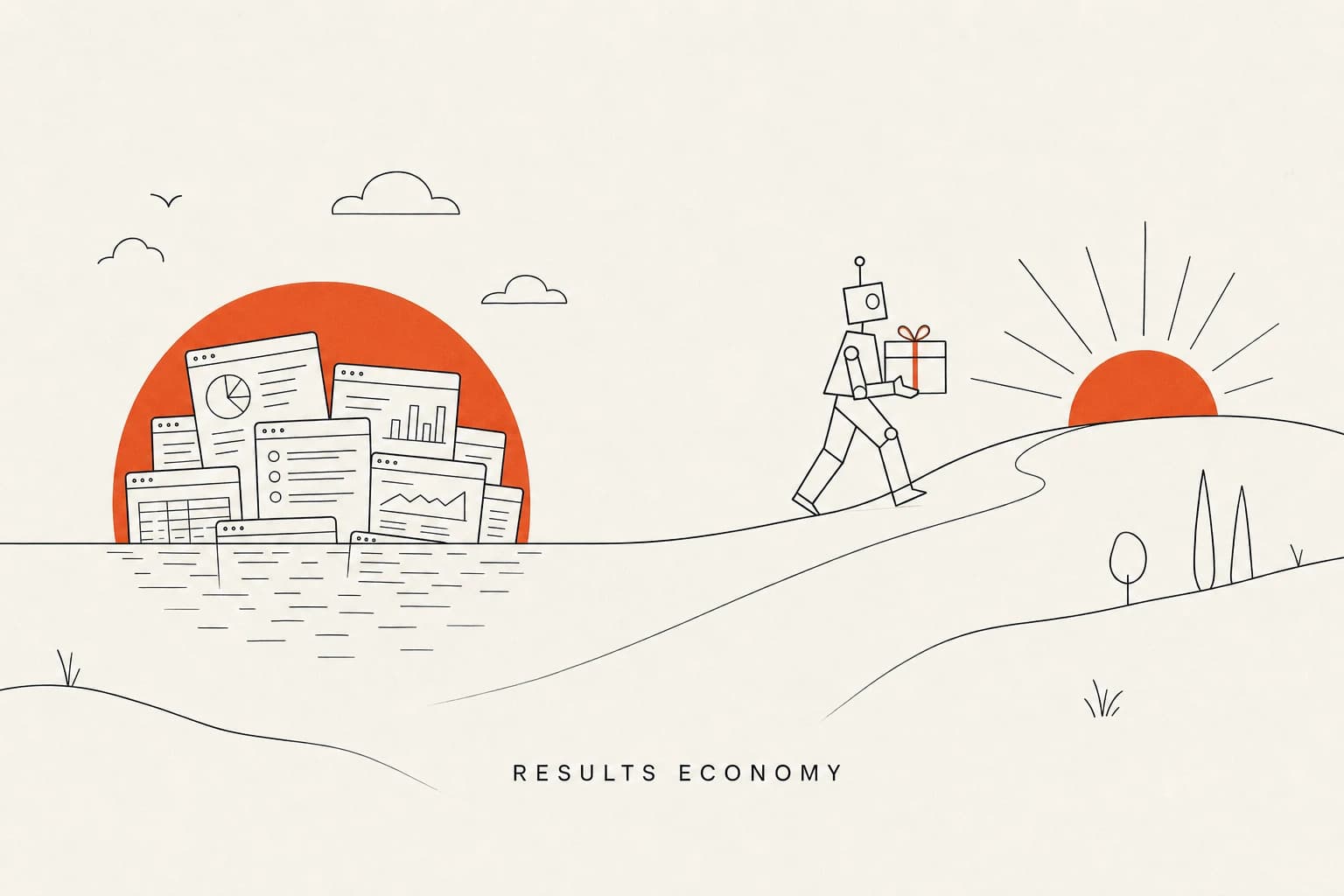
Why SaaS is hitting its ceiling and how the "results economy" grows out of the cracks: the business logic of agents selling results instead of tools, and the stages their commercialization will pass through. The second half is a labeled fantasy that pushes this logic decades further out.
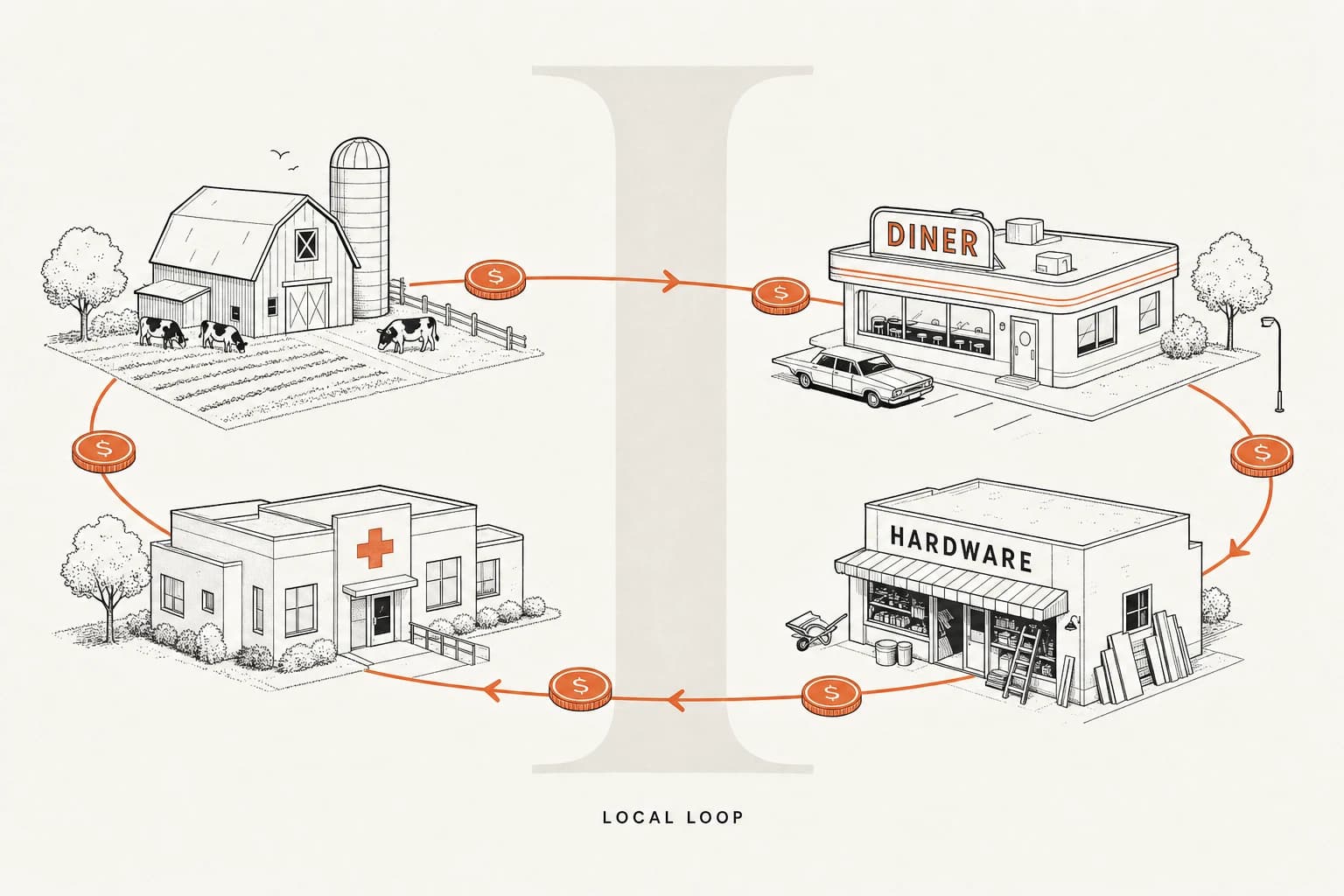
How does a small American town that seems to produce nothing actually stay alive? A layer-by-layer dissection of what really keeps a local economy running.
Founder notes
Principles I'm using to build AI-native organizations and products.
Founder notes
Published in arXiv.org on June 16, 2024 · 87 citations on Semantic Scholar
A survey of the main risks in deploying LLM systems and the guardrail patterns used to mitigate them, including bias and toxicity checks, prompt and agent safeguards, privacy concerns, and the tradeoffs required to ship these systems responsibly.
Founder
Founder & Engineer focused on AI-native organizations and agentic systems.
Product Studio · Founder
Build apps that help people and entertain people.
Stealth Mode
An emotional companion AI that chats, empathizes, and listens, helping users find virtual friendship and love. Angel round valuation $15M.
Ace-Assist · Founder
AI agent for students connecting email, calendar, and files to build smart study workflows.
SpeakSharp.io · Founder
Top 10% of YC 24 Summer; CMU Nova Spark Grant; Swartz Center & Project Olympus member.