Engineering & Productivity
When AI Speeds Up Development, Release Cannot Still Depend on Human Babysitting
Once AI is deeply involved in development, release workflows need to be redesigned too. True one-click release is not about clicking faster. It is about removing human attention from release details.
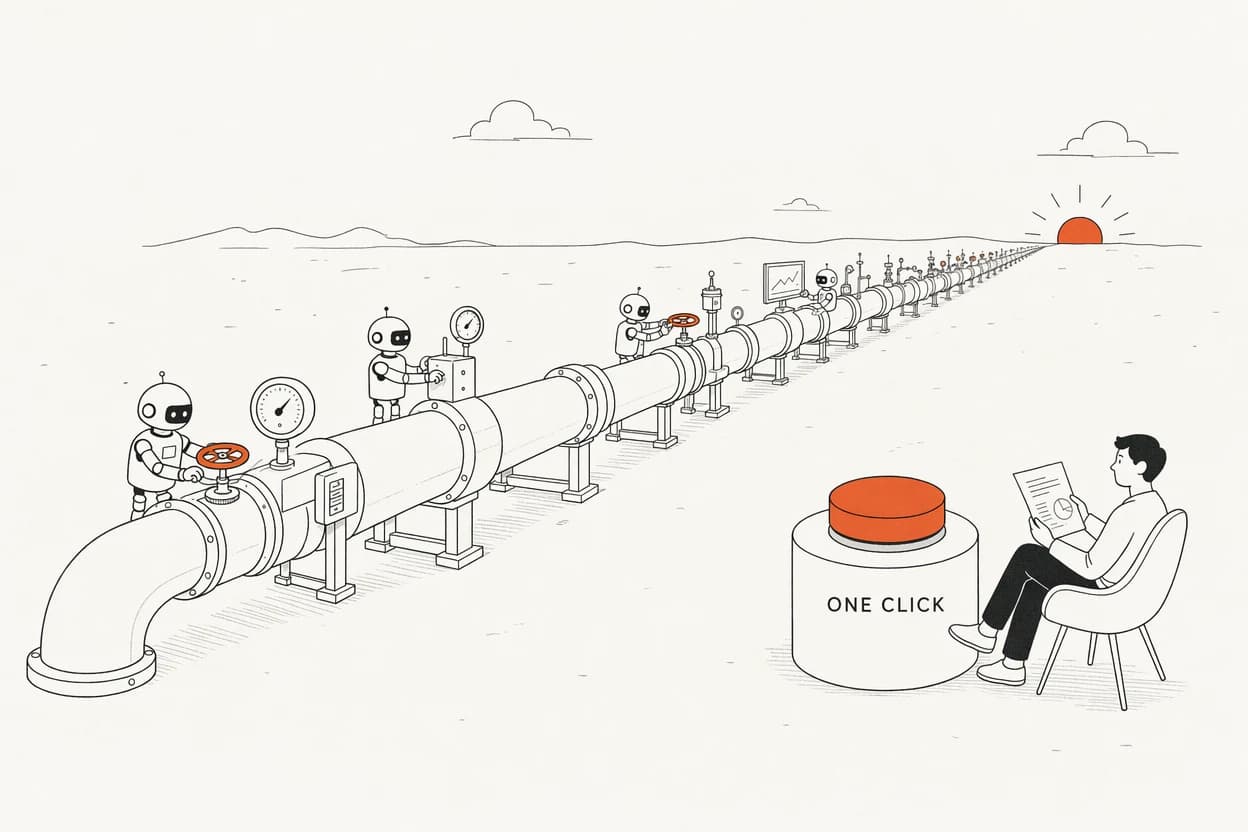
Many of us who are engineers, product managers, or founders are already heavy AI users. Code generation, requirement changes, test coverage, and documentation have all been accelerated. A single person can now move much more work in a day than before.
But a new bottleneck appears almost immediately. Development has become AI-native, while release is still stuck in an era of human babysitting. My take is that this is dangerous.
Release isn't just the tail end of development; it's the boundary where the product actually enters the user's world. If the first 90% of the work is AI-native, but the final 10% still depends on someone remembering context, checking lists, and manually validating outcomes, then release becomes the slowest and most attention-expensive part of the whole system.
My release surface is too wide for human babysitting
For many, "release" means deploying a web service. That isn't my reality. A single release for me can cover multiple repositories, a CLI, various skills and plugins, the website, documentation, and both open-source and closed-source components.
In this kind of system, the difficulty isn't that any single step is complex. It's that there are too many relationships someone is supposed to "just remember to check." The code gets updated but the CLI package doesn't follow; a plugin changes but the website still describes the old behavior; the docs add a capability while the installer still points at an older version.
At this surface area, expecting a human to hold all of those dependencies in their head isn't realistic. To put it more directly, if a release system still needs me to remember them, it hasn't really been designed yet.
Why I don't use continuous release for every tiny change
Some teams practice extremely high-frequency releases, where a small change is merged and goes live immediately. This can be the right model in many environments, but it depends on a key condition: the release surface must be narrow and rollbacks must be cheap.
For a pure web service, the release target is mostly the live service. If something goes wrong, you can quickly roll back to the previous version, since the user's side doesn't retain much local state. In that world, high-frequency release is very safe.
My situation is different because we operate open-source skills. Once a skill is published, users may have already installed, copied, or integrated it. It's not like a web service where a server rollback instantly returns every user to the old version. Some things are much harder to recall once they reach the user's machine.
So for my system, a more reasonable rhythm is entering a release cycle twice per day. This is fast enough that changes don't pile up, but bounded enough that a full set of pre- and post-release checks can be run every time. Release frequency shouldn't be a religion. The real questions are about the width of the release surface and the cost of a rollback. If your release includes a CLI, plugins, documentation, and local installation paths, the question is not only "can this go live?" but also "can this be pulled back?"
I mostly just read the AI's test report now
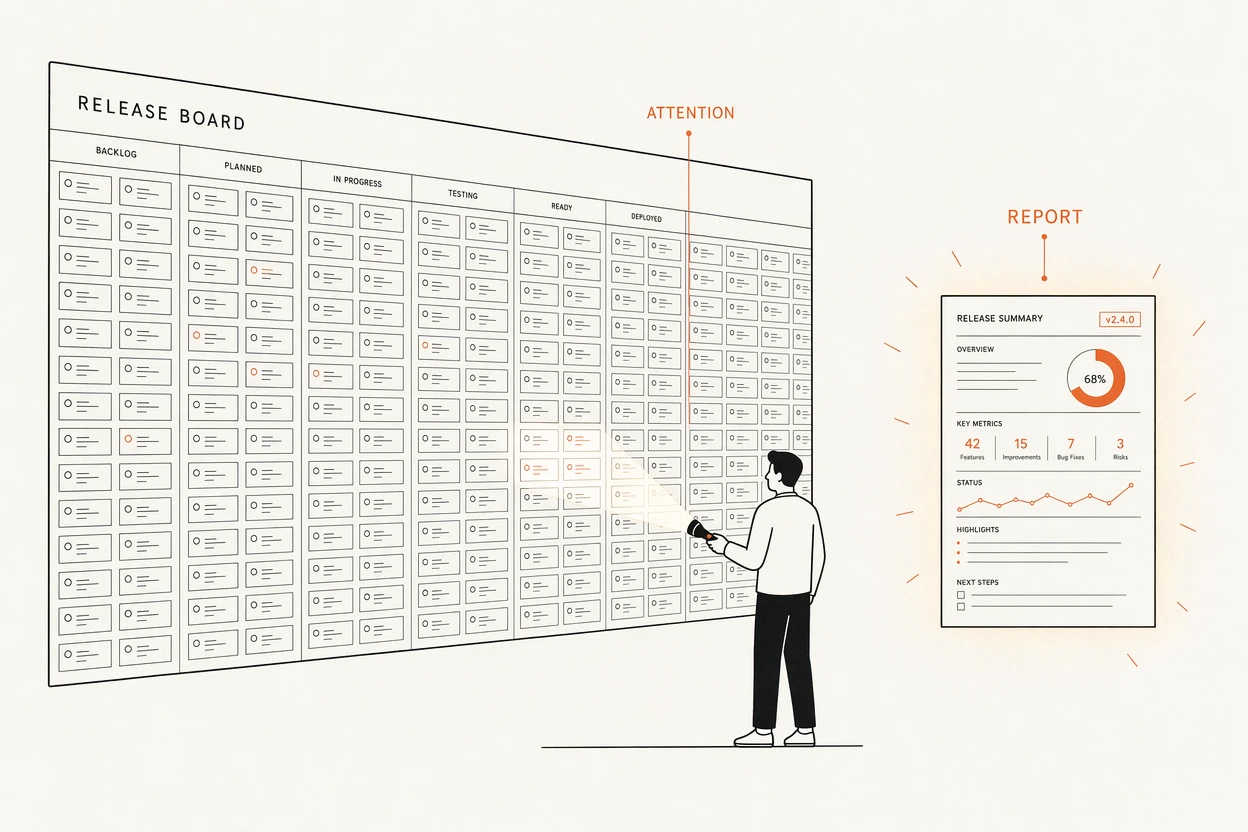
I usually initiate a release twice a day, but I don't personally inspect every detail. My attention boundary has become very clear: I read the AI-generated test report.
This report summarizes what changed, which repositories are involved, whether open-source and closed-source parts are aligned, if relevant tests passed, and whether documentation and installation paths are consistent. It also confirms that pre-release, end-to-end business requests completed successfully. If that report looks good, I let the AI continue with the pipeline.
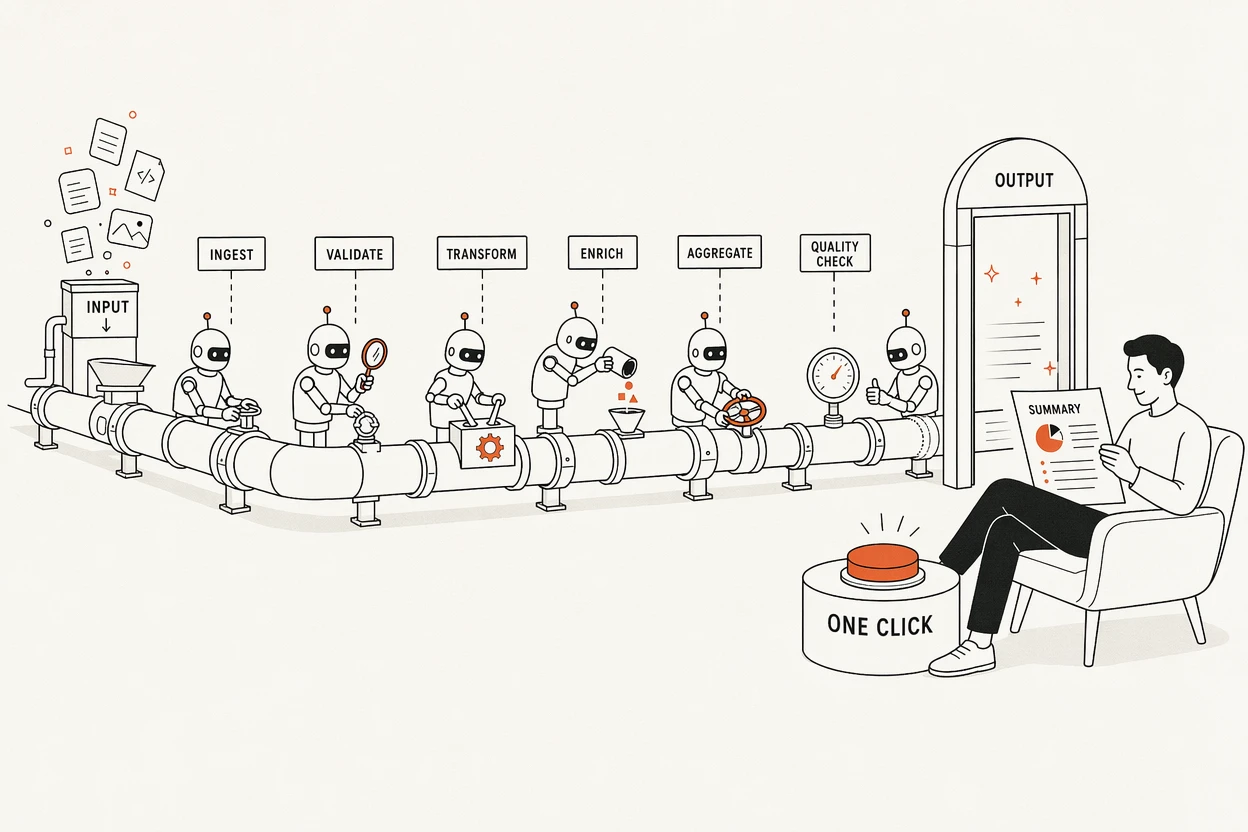
The pre-release tests, the release action itself, and post-release validation are all automatically triggered. The system runs real business requests whenever possible, not mocks. After the release, I still don't care whether a command printed a success message. I care about the acceptance result: is the production version correct and are key capabilities working from a user's point of view?
I've found that my own attention spent on releases has dropped from roughly 20% of my time to about 5%. This isn't because I care less, but because that attention is no longer spent on low-value details.
One-click release is an attention boundary, not a button
Many people think one-click release just means clicking a button to push code live. That's not how I see it.
True one-click release defines a clear attention boundary. Before the button is clicked, the system has already verified what needs to be verified. After, it continues to validate the outcome. The human only needs to read conclusions and make decisions at a few important gates. It doesn't mean fewer checks; it means fewer checks performed personally by a human. It turns risk into a report.
This matters because human alertness has a budget. When you release once a day, you might be able to read a checklist carefully. But at two or three times a day, manual confirmation can easily turn into mechanical clicking. The process gives a false sense of safety, because in reality, nobody has the energy to rebuild the full context every time.
An AI-native release system should be operated by AI
In an AI-native workflow, the release system should be more than an upgraded CI/CD pipeline. It should be an AI-operated system.
It should know the ground truth of the previous release, where the current changes came from, and how all the components are supposed to line up. It should also proactively run checks before and after release, instead of waiting for a human to remember to do it.
Most importantly, it should be designed to fail. If a repository isn't aligned, or the installation path doesn't work, or the documentation and actual capabilities disagree, the release should fail. A good pipeline isn't one that makes every release succeed, but one that makes a release fail early when it shouldn't succeed.
The real shift is to an AI-managed process
The old way was a human-watched process. People held meetings, checked lists, ran commands, and watched logs to decide if anything was missed.
What I actually want is an AI-managed process. The AI advances the release, runs validation, archives evidence, and reports the result. The human reads the final test report and only intervenes when product judgment or risk ownership is required.
For heavy AI users, this is not a luxury. It's a necessity. Once AI accelerates development, release cannot remain the part of the system where humans provide the safety net by paying attention.
I didn't build this pipeline to make releases look more automated. I built it so I could stop thinking about the details of releasing. The system can remember the details, the AI can execute the checks, and the pipeline can expose failures. This frees up human attention for conclusions, risks, and decisions. That, to me, is the release model for the AI era: not humans using AI to release, but AI managing the release while humans provide the judgment.
Get new articles by email
One email when a new article lands. Nothing else.